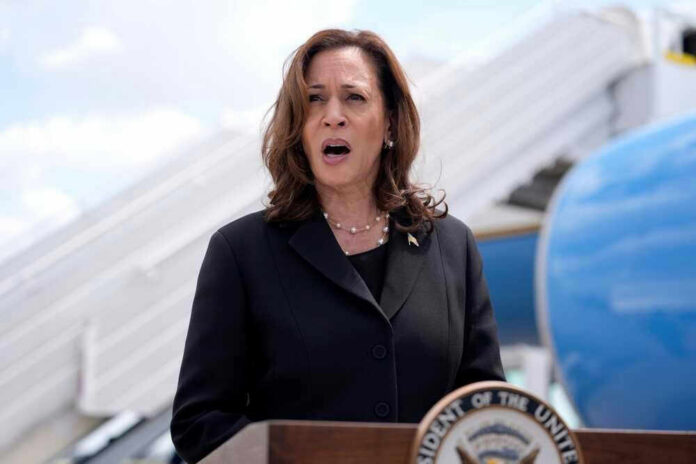
Kamala Harris plans to barnstorm battlegrounds, and Michigan is next on her list with Abdul El-Sayed by her side.
Story Snapshot
- Harris is reentering the midterm fight and booking swing-state stops.
- Some Democrats welcome her fundraising draw and base energy.
- Others in red states say “no thanks,” arguing she hurts them back home.
- The real test is turnout, money, and message control in states like Michigan.
Why Michigan, Why Now, and Why Abdul El-Sayed
Harris is choosing states where Democrats can win with high base turnout and strong donor energy. Michigan fits that bill, with large Democrat cores in Detroit, Ann Arbor, and college towns. Campaigning with Abdul El-Sayed signals a push to the party’s progressive wing and younger voters.
That coalition can fill rooms, fundraise, and flood early vote operations. The Ossoff stop in Georgia shows the model: raise cash, rally reliable voters, and feed local media for days.
Former Vice President Kamala Harris will campaign with Michigan Senate candidate Abdul El-Sayed next week as Democrats battle to hold onto the seat and take control of the Senate in November. https://t.co/J8KeF3wqnj
— The Washington Times (@WashTimes) September 16, 2026
Events like these are not random photo ops. Campaigns plan them to lift specific candidates and drive earned media. Harris can headline a dinner, hold a rally, then splice clips into digital ads and volunteer texts. That loop keeps small donors warm and keeps canvassers motivated.
Political science shows campaign attention can lift turnout and share, but the gain is often modest and depends on context. A one- to two-point bump can still flip a close race.
The Mixed Welcome Inside the Democrat Party
Multiple Democrats in conservative states have asked Harris to stay away. Iowa candidates said as much on the record, preferring to run on local brands rather than a national one that polls poorly where they live. Harris publicly waved it off, saying candidates should do whatever helps them win.
That message is practical and blunt: if her presence helps, book her; if it hurts, skip it. The Georgia and Michigan invites show some campaigns want her draw.
That split highlights two truths. First, national figures can fire up donors and base voters. Second, they can also give opponents an easy attack line.
Conservative voters do not need a fresh reason to dislike Harris, and swing voters in red areas may tune her out. The smart Democrat play is local choice. Let Ossoff use her in Atlanta. Let Michigan campaigns test her with Detroit and the suburbs. Keep her off the trail where she is a net loss.
What Success in Michigan Actually Looks Like
Winning is not only about a viral clip. A useful surrogate stop hits three targets. It raises serious money fast. It recruits volunteers and locks down weekend canvass shifts. It sets a message frame that fills local news for several cycles.
If Harris and El-Sayed deliver those outcomes, the visit works even if polls barely twitch. Research on large-scale campaign programs finds effects that are real but small and uneven. Small can still decide a Senate race.
There is also risk. Harris’s recent national image remains polarizing, and Republicans will try to tie every Michigan Democrat to her positions. If the event becomes about her brand rather than local issues like auto jobs, cost of living, schools, and crime, the value drops.
Michigan voters reward focus and competence. The events need tight scripts, local validators, and clear asks: donate, vote early, bring two friends. Discipline, not spectacle, is the edge.
The Conservative Read on the Strategy
The Democrat bet is simple: rally the base in blue islands inside purple states. That often ignores the middle, which still decides close races. A surrogate who excites the left can also harden opposition and push swing voters away.
That is why candidates in conservative places are keeping her at arm’s length. Harris in Detroit makes tactical sense; Harris in deep-red Iowa does not.
Michigan will show whether Democrats learned from past cycles. If Harris helps raise funds and boost early vote among reliable Democrats, the party gets what it needs. If her presence drowns out local candidates or hands Republicans an easy foil, the gambit backfires.
The Ossoff date and the Michigan swing suggest Democrats will keep testing markets. The scoreboard is turnout, not headlines. Close races turn on inches. Surrogates either add inches—or they do not.
Sources:
townhall.com, silive.com, politico.com, bbc.com, nypost.com, redstate.com