Two cargo ships were struck by drones in Bulgaria’s Black Sea zone, one sank within minutes, and 11 sailors vanished into rough water.
Story Snapshot
- Prime Minister Rumen Radev confirmed multiple drones hit two ships in Bulgaria’s exclusive economic zone.
- The Togo-flagged Alfa Watan sank; the Palau-flagged Able caught fire and its crew was rescued.
- Search teams found only rafts and gear; Bulgaria later suspended the search for the missing.
- Marine insurers widened the Black Sea high-risk zone as attacks on shipping surge.
What Happened And Where It Crossed A Line
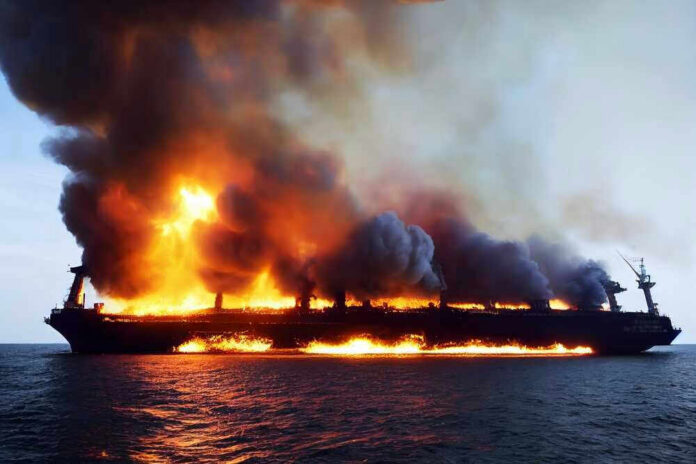
Bulgarian authorities said several drones hit two commercial vessels about 80 miles off the Bulgarian coast, inside the country’s exclusive economic zone. Prime Minister Rumen Radev briefed the public after an emergency meeting and called the strikes a clear breach of norms that protect civilian shipping. The cargo ship Alfa Watan suffered critical damage and sank quickly. The merchant ship Able reported a fire on board, and responders evacuated its crew in time.
Rescue aircraft and ships searched through debris fields, foam, and oil. Teams recovered life rafts and jackets but no crew from the sunken Alfa Watan. Officials later suspended the search, citing sea conditions, time elapsed, and the nature of the hull damage. The number of missing settled near a grim count: 11 sailors, largely from the Alfa Watan manifest. Authorities continue to monitor the site and collect evidence for a maritime casualty record.
Why This Strike Matters For Every Grocery Bill
The Black Sea now functions as a commercial-risk zone, not just a naval theater. Marine underwriters expanded the high-risk map and raised war premiums as attacks reached routine shipping lanes used for grain and fuel. That money shows up in the price of bread and feed. Each extra half-point of insurance on a vessel can add real costs to every ton of cargo. Those costs ripple through ports, railheads, and supermarket shelves across Europe and beyond.
Analysts have tracked a steady spread of attacks beyond Ukraine and Russia’s port approaches. The Bulgaria incident is part of that shift, with drones—both in the air and on the sea—reaching established merchant routes. Maritime security briefings warn that civilian crews face layered hazards: explosive drones, electronic interference, and spoofed navigation signals. The Alfa Watan sinking marks the kind of event insurers and shippers use to reset their risk models across an entire region.
Who Saved Whom, And How Crews Train For This
The Able’s crew survived because watch standards and drills worked under pressure. Fire broke out after impact, but the crew executed emergency steps, issued distress calls, and mustered for evacuation. Rescue units from the Bulgarian coast reached the position and pulled mariners out before fire and smoke spread. The Alfa Watan’s crew had less time. Rapid flooding, power loss, and darkness can turn minutes into seconds. That timing explains the stark difference in outcomes.
Shipping companies now update voyage plans with “threat legs” mapped across the Bosphorus, the western Black Sea, and approaches to Romanian and Bulgarian ports. Masters brief crews on low-tech defenses and deck watch tactics. They adjust speeds at night, reroute away from known traffic separation points when threat reports spike, and run blackout conditions to reduce visual signature. These steps help, but they do not guarantee survival against a fast, low-profile drone coming in at sea-skimming height.
What Comes Next For NATO Waters And Common Sense Policy
Bulgaria’s case forces a hard review of deterrence in waters that border the North Atlantic Treaty Organization. Civilian ships need predictable lanes, not a patchwork of ad hoc warnings. Clear escort rules, better radar and electro-optical coverage, and stronger coordination between coast guards and navies can reduce the window for an attack. That approach fits conservative principles: protect lawful commerce, punish those who target civilians, and keep routes open with smart, limited force.
A cargo ship has sunk off Bulgaria's coast after an overnight drone attack. 11 sailors missing. Bulgaria has summoned Russia's ambassador. #BlackSea #Bulgaria
🎵 pic.twitter.com/qVP631kK26— FactWireDaily (@Factwiredaily9) October 13, 2026
Insurers and shippers will move first. Expect higher war risk premiums, stricter charter clauses, and more no-go zones after dark. Expect more naval presence along Bulgaria’s routes during harvest peaks. Governments should pair that with fast incident forensics and public reporting to keep rumor from setting rates by fear. The stakes reach far beyond Sofia. When one ship sinks in the Black Sea, the bill travels from the quay to your kitchen within weeks.
Sources:
nbcnews.com, shipmanagementinternational.com, turkiyetoday.com, foxnews.com, mezha.net, mypanhandle.com