The most unsettling part of JetBlue Flight 948’s “drone strike” is how sure the pilot sounds while the evidence stubbornly refuses to back him up.
Story Snapshot
- JetBlue Flight 948’s captain radioed that his jet “collided with a drone” at about 3,000 feet on approach to New York’s John F. Kennedy International Airport.
- Federal Aviation Administration investigators and JetBlue’s own engineers later found no damage and no proof that anything hit the aircraft’s skin.
- The case fits a growing pattern where pilots report drone impacts or near misses, but hard evidence often comes up empty.
- The clash between pilot testimony and physical proof raises bigger questions about drone risks, personal responsibility, and how authorities shape the story.
A pilot declares a drone strike, but the jet tells a different story
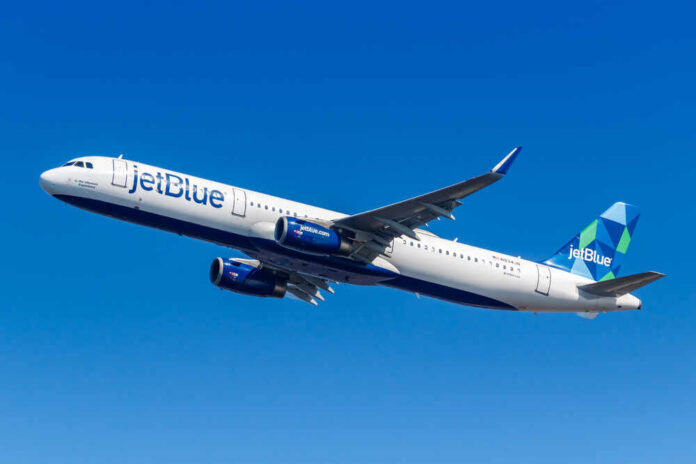
JetBlue Flight 948 was descending into John F. Kennedy International Airport from Las Vegas when the cockpit suddenly became the center of a mystery. As the Airbus A321 lined up for landing at about 3,000 feet, the captain called air traffic control and said the aircraft had just collided with a drone, adding that the object hit “right above the cockpit.”
Multiple news outlets replayed that quote and framed it as a chilling mid-air strike, because a hard hit at that altitude could have meant serious danger for everyone on board.[3]
JetBlue quickly confirmed the report and pulled the aircraft from service for inspection after it landed safely. That is standard practice when a pilot reports any possible collision, whether with a bird, drone, or other object.
The airline’s statement described the event as a “possible drone encounter,” careful wording that echoed the captain’s claim but left room for doubt. At the same time, the Federal Aviation Administration opened a formal investigation, signaling that regulators take drone reports near major hubs seriously, especially at altitudes far above normal hobby flying.[1]
The inspection finds nothing, and the official story shifts
Once the JetBlue aircraft was back at the gate, engineers checked the nose, windshield area, and surrounding structure for dents, scrapes, cracks, or any sign that something had struck above the cockpit. JetBlue later said the post-flight inspection “found no damage or evidence of a collision,” and Federal Aviation Administration officials backed that up.
That single line turns the story: from “jet hit by drone” to “pilot reported a strike that left no mark at all.” For a modern airliner, even a small drone would usually leave some trace if it truly made contact.[1]
A JetBlue pilot reported their plane possibly struck a drone at 3,000 feet while on final approach to John F. Kennedy International Airport. The plane landed safely, and all passengers were able to exit normally. https://t.co/OirVItoMia pic.twitter.com/JlqKgCnToK
— CBS Evening News with Tony Dokoupil (@CBSEveningNews) June 29, 2026
There is more missing than damage. No drone operator has been identified. No other crew or passengers reported seeing the object. Authorities have not released radar plots or airport surveillance showing a drone in the jet’s path at 3,000 feet. The pilot’s account stands alone, without a second confirming witness or physical evidence.
Many mainstream outlets focused on exactly that gap, stressing that while the captain believed something hit the aircraft, investigators cannot yet prove that a drone existed at the location he described.[4]
Why unconfirmed “drone strikes” keep showing up in the news
This case is not unique. Over the last decade, pilots have reported drones near major airports including John F. Kennedy International Airport, LaGuardia, and others, triggering Federal Aviation Administration investigations and headlines.
In some situations, crews described drones passing within a hundred feet of their wings during landing, close enough to raise real concern. Follow-up checks often found no damage, but the reports still forced authorities to review radar data, warn other pilots in the area, and sometimes call in police helicopters to search for the operators.[2]
In at least one similar incident near San Diego, a United Airlines pilot said his jet had collided with a “red shiny object” believed to be a drone while descending, only for maintenance teams to later report no damage after a full inspection.
Academic and policy research has noted that, despite millions of flights and a growing number of drones, confirmed collisions between consumer drones and scheduled passenger aircraft in United States airspace remain extremely rare.
One analysis even argued that no commercial drone or hobby quadcopter has yet been firmly documented hitting a passenger jet inside the United States, which puts stories like JetBlue 948 squarely in the “claimed but unproven” category.[11][12]
Risk, responsibility, and the way institutions frame the story
Drone impact tests show that a solid hit can seriously damage an aircraft’s nose or engine, especially if the drone’s battery or hard frame strikes sensitive gear. A suspected drone collision with a Boeing 737 near Tijuana damaged the nose and onboard radio systems, proving the threat is not imaginary.
From a common-sense view, a reckless drone pilot flying into restricted airspace near a busy airport is not just careless; that person is violating clear rules, endangering many lives, and should face stiff civil and criminal penalties if a collision is proven.[14]
A helicopter pilot reported a remote-controlled aircraft flying close to their aircraft near John F. Kennedy International Airport in New York. The report came hours after a JetBlue pilot reported a possible drone strike while approaching JFK; the flight landed safely and no…
— NTC Report (@NTC_Report) June 30, 2026
The hard part is the “proven” part. In the JetBlue case, the absence of physical evidence gives aviation authorities and media outlets room to downplay the incident as “unverified,” which also helps calm public fear and protect industry reputation.
Some critics argue that the aviation establishment shows a quiet reluctance to admit that cheap consumer drones can threaten large jets near major hubs. They see the “no damage” narrative as comforting but incomplete, especially when Federal Aviation Administration investigations drag on without clear public answers.[1]
What this case really tells us about flying and trust
For passengers, the key facts are simple. The pilot believed something hit the aircraft. The plane landed safely. JetBlue and Federal Aviation Administration inspectors found no damage and no proof of a drone strike. The event fits a broader pattern where pilot perception during tense approach moments sometimes clashes with what the metal later shows.
That tension matters because we trust both the pilots who speak up and the engineers and regulators who insist on evidence. When their stories diverge, we should pay attention, ask hard questions, and demand honest data rather than easy reassurance.[3]
Sources:
[1] Web – JetBlue flight reports striking drone while landing at JFK
[2] Web – What happened to JetBlue Flight 948? FAA investigates reported …
[3] Web – DRONE STRIKE REPORTED at JFK Airport 29 JUN …
[4] YouTube – JetBlue pilot reports striking drone as flight approached JFK Airport
[11] Web – JetBlue pilot reports hitting drone while landing at New York’s JFK
[12] Web – DRONE STRIKE REPORTED at JFK Airport 29 JUN 2026 – Instagram
[14] Web – JetBlue aircraft strikes drone on approach to New York JFK A …