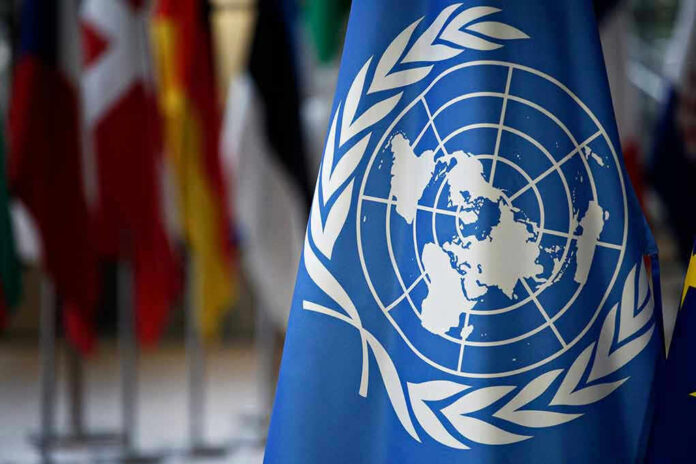
Trump’s revolutionary Board of Peace demands nations pay $1 billion for permanent membership, bypassing the failed United Nations to deliver results-driven international governance that actually works.
Story Highlights
Board of Peace requires $1 billion contribution for permanent seats, with Trump maintaining final authority
60 countries invited to join an alternative to UN bureaucracy for Gaza reconstruction oversight
Trump-aligned nations like Argentina and Hungary quickly accepted, while European officials expressed skepticism
Board operates outside traditional UN frameworks with a mandate extending beyond Gaza to global conflicts
Trump’s Breakthrough Alternative to UN Dysfunction
President Trump has established the Board of Peace as a decisive alternative to the gridlocked United Nations, requiring countries to contribute $1 billion within the first year for permanent membership. The White House clarifies this contribution demonstrates “deep commitment to peace, security, and prosperity” rather than mere financial obligation. Unlike the UN’s endless debates and resolutions, Trump’s board operates with clear authority structures and accountability. Countries refusing the commitment receive three-year renewable terms subject to Trump’s approval, ensuring only serious partners participate in meaningful conflict resolution.
Trump wants nations to pay $1 billion for permanent Board of Peace seats https://t.co/QwgcJSntcR
The board emerged from Trump’s successful 20-point Gaza plan, implemented after October 2025’s ceasefire breakthrough. This represents the kind of practical diplomacy Americans voted for – results over rhetoric. The UN Security Council endorsed Trump’s approach through Resolution 2803, recognizing what conservative leaders have long known: traditional multilateral institutions fail when decisive action is needed. Trump serves as the inaugural chair with final decision-making authority, ensuring efficiency over endless committee deliberations.
International Response Reveals Global Power Realignment
Trump-aligned nations immediately recognized the board’s value, with Argentina’s Javier Milei calling the invitation an “honor” and Hungary’s Viktor Orbán swiftly accepting. These leaders understand Trump’s transactional approach delivers tangible outcomes unlike virtue-signaling international forums. Marco Rubio, Steve Witkoff, Jared Kushner, and World Bank President Ajay Banga join Trump on the Executive Board, representing serious expertise over political posturing.
European officials predictably express “limited appetite to significantly fund an organization that advances a Trump-led world order,” revealing their preference for ineffective globalist institutions over American leadership. The UK and Canada demand clarification on legal frameworks and fund management, demonstrating typical bureaucratic hesitation when confronted with innovative governance structures. Their concerns about Trump’s centralized control ignore the obvious reality that effective leadership requires clear authority, not consensus paralysis.
Breaking Free From Globalist Institutional Failures
The $1 billion commitment creates a merit-based international system where nations demonstrate genuine dedication rather than empty promises. European officials worry about “fragmenting the multilateral system,” but patriots understand this fragmentation is precisely what’s needed to escape decades of UN failure. Trump’s board addresses “areas affected or threatened by conflict” globally, suggesting broader applications beyond Gaza reconstruction.
This initiative represents everything conservatives support: accountability, efficiency, and American leadership replacing globalist bureaucracy. While critics focus on the financial requirement, they ignore the board’s potential to accumulate substantial reconstruction capital and deliver measurable results. The Palestinian National Committee for the Administration of Gaza operates under board oversight, creating functional governance structures that exclude Hamas and other terrorist elements. Trump’s approach prioritizes practical outcomes over international virtue signaling, exactly what American foreign policy needs.