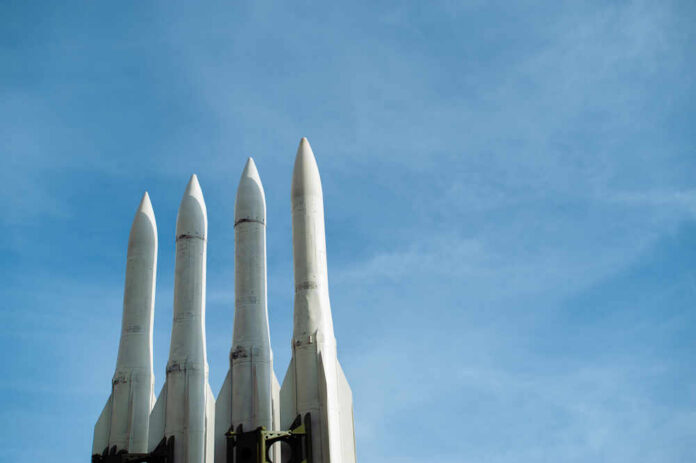
The night Iran tried to surprise American troops with ballistic missiles, every one of those missiles died in the sky.
Story Snapshot
- Iran launched a surprise ballistic missile attack targeting U.S. forces in the Middle East.
- U.S. Central Command says all Iranian missiles were intercepted with no American casualties.
- Hours later, U.S. and Saudi Arabia struck Iran-backed militias’ weapons and logistics hubs inside Iraq.
- Iran calls its actions retaliation, while Washington frames its response as clear self-defense.
How Iran’s Surprise Missile Gambit Blew Up In Mid-Air
Islamic Revolutionary Guard Corps forces in Iran fired multiple ballistic missiles in what U.S. Central Command described as an “attempted surprise attack” on American troops stationed in the Middle East.
These missiles were aimed at U.S. bases, not empty sand, in the middle of an already tense shooting war. According to the Central Command statement posted on X, American air defenses intercepted every single missile before impact and kept U.S. forces at “a high state of readiness” afterward.
The U.S. military says it successfully intercepted an Iranian missile barrage and worked with Saudi Arabia’s forces to strike sites in Iraq that Tehran-backed militias have used to launch attacks in recent days. U.S. Central Command in a statement Tuesd… https://t.co/IwQuhPd2Yi
— KSTP (@KSTP) July 29, 2026
Reports compiled by the Associated Press and other outlets say this barrage abruptly ended a short pause in fighting that mediators were trying to stretch into real talks. Instead of de-escalation, the missile launch snapped the conflict back into live fire.
That kind of strike is exactly why the United States maintains layered defenses and forward-deployed forces in the region: so Iran cannot simply lob missiles at Americans and expect them to land.
What The U.S. And Saudi Arabia Hit Back Inside Iraq
Once the missiles were downed and it was clear no U.S. service members had been killed, the response shifted from defense to punishment. Pentagon officials say U.S. and Saudi Arabian forces then targeted multiple sites in eastern Iraq that Iran-backed militias had used to launch recent drone attacks across the region.
Central Command and other officials described these locations as weapons and logistics hubs linked to terrorist groups loyal to Tehran, not random civilian areas.
Available reporting says this was not some one-off warning shot. Militias had already used Iraqi territory as a launchpad for drones aimed at U.S. interests and partners. That pattern matters for any common-sense reading of self-defense.
If armed groups keep firing from a particular set of hangars, warehouses, or compounds, hitting those sites is a way to stop the next wave before it leaves the ground. That is the logic American commanders presented to justify striking inside another country’s borders.
Iran’s Retaliation Story Versus American Self-Defense
Iran and its aligned outlets paint a very different picture. Iranian-linked reporting frames missile and drone strikes as retaliation for earlier U.S. and allied operations, casting Tehran’s moves as defensive and even necessary as long as American attacks continue.
They name U.S.-linked bases like Ali Al Salem and Arifjan and warn locals to stay away, claiming this shows they are aiming at military targets rather than civilians.
But this narrative runs into two hard facts. First, Iran crossed borders to fire at U.S. forces and regional neighbors, including Kuwait and Bahrain, who were not shelling Tehran’s suburbs. Second, Central Command reports intercepted missiles, no U.S. casualties, and then carefully targeted strikes on militia infrastructure rather than Iranian cities.
That looks far more like an American effort to keep its people safe and punish the trigger men than some power grab for territory.
The Fog Of War And The Sovereignty Question
Critics of U.S. policy raise a serious point about Iraqi sovereignty. Iraq did not publicly invite American and Saudi jets to bomb militias on its soil in this episode, and the open record so far includes no detailed Iraqi government condemnation or approval.
There is also no independent satellite or on-the-ground battle damage report yet that proves every target was actively used at the moment of the strikes. That gap gives skeptics room to argue Washington stretched self-defense inside a country that is supposed to be a partner, not a battlefield.
The U.S.–Saudi response still lines up with common sense better than Tehran’s choices. Iran chose to fire ballistic missiles at foreign-based American forces and drone attacks from Iraqi soil.
The United States and Saudi Arabia chose to intercept those missiles and then hit identified militia logistics and weapons sites, while reporting no U.S. dead. In a region where propaganda is constant and proof is rare, that is the core story most grounded in the facts we have.
Sources:
apnews.com, theguardian.com, goodmorningamerica.com, ctvnews.ca, defenseone.com