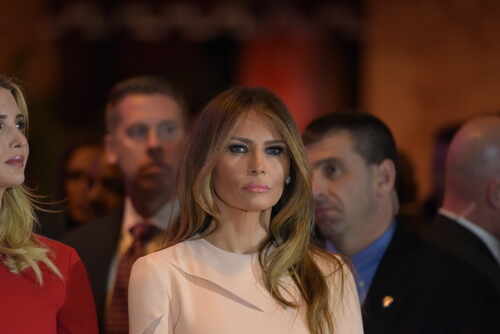
Melania Trump told a national television audience this week that Americans should not trust artificial intelligence blindly, but should learn how to use it wisely instead of fearing it.
Quick Take
- First lady Melania Trump urged Americans to stay “vigilant” and get educated about AI during a Wednesday appearance on Fox Business’s “The Big Money Show.”
- She warned viewers not to “believe everything” AI tools produce and pushed users to learn how to spot what is real.
- Her comments build on her ongoing Fostering the Future Together initiative, which pairs child education with AI safety.
- The push fits a broader trend of governments and tech companies treating AI literacy as a public priority.
What The First Lady Told Fox Business
Melania Trump sat down with “The Big Money Show” hosts on Wednesday and addressed the anxiety many Americans feel about artificial intelligence head-on. “I know, now a big topic. It’s AI, and everybody’s scared about it,” she said. “I feel that they need to be vigilant. We need to use it wisely.”
She did not stop at a general warning. Melania specifically told users not to “believe everything” AI systems generate, pushing Americans to learn how to tell real information apart from AI-made content. Her message treated AI literacy as a basic skill, not a niche concern reserved for tech workers or students.
A Bigger Campaign Behind The TV Appearance
These remarks did not come out of nowhere. The First Lady has spent much of the past year building Fostering the Future Together, a global coalition of first spouses and world leaders focused on getting children safe, useful access to AI tools. The White House describes it as a joint effort to help kids “learn, grow, and thrive” through responsible tech use.
In September, hours after President Trump addressed the United Nations General Assembly, the First Lady announced her coalition had locked in partnerships with seven technology companies to support children worldwide. She framed the moment as proof that coordinated action gets results, saying nations speaking with one voice make the world listen.
Earlier this year, she brought the message even closer to home, appearing alongside a humanoid robot at a White House education summit that drew representatives from a record 45 nations.
She laid out three pillars for the next generation: AI-personalized learning, humanoid classroom tools, and technology as a driver of America’s competitive edge.
Melania Trump says Americans shouldn't fear AI, but they shouldn't blindly trust it either.
Speaking on FOX Business after ringing the opening bell at the New York Stock Exchange, the first lady says AI can be a powerful educational tool if people use it wisely and verify the… pic.twitter.com/1DwkOAMlqq
— FOX Business (@FoxBusiness) September 24, 2026
Why Education, Not Just Access, Is Her Focus
Melania Trump has repeatedly drawn a line between simply handing kids AI tools and actually teaching them to use those tools well. “Access alone is not empowerment,” she said at one event, adding that children need both the tools and the know-how to use them wisely. That distinction underpins her entire initiative.
She has also framed the moment in bigger terms, describing the country as entering a “technological revolution” that families cannot afford to ignore. Fostering the Future Together, she said, exists specifically to empower children through a mix of technology and education, not one without the other.
Part Of A Much Larger Global Push
Melania’s message lines up with a pattern playing out well beyond the White House. Governments, international bodies, and major companies have increasingly treated AI literacy as essential public infrastructure, not an optional extra. The World Bank has pointed to public-private partnerships as the key to scaling AI education fast enough to matter.
That pattern shows up domestically too. The White House Task Force on AI Education has lined up corporate partners to fund K-12 AI resources, while teachers’ unions have launched their own training academies with tech giants like Microsoft and OpenAI.
International groups, including the International Telecommunication Union, have built similar coalitions to make AI skills available “to everyone, everywhere.”
Whether one views this coalition model as smart, practical capacity-building or as a symbolic branding exercise likely depends on what a reader weighs more heavily: the actual programs reaching classrooms or the high-profile diplomacy surrounding them.
Either way, the underlying argument Melania is making, that ordinary Americans need real AI skills rather than blind trust, tracks with a moment when AI-generated content is becoming harder to distinguish from the real thing.
Melania Trump Launches IMPERIA Initiative and Promotes AI Education https://t.co/X3o2QtEiy1 via @YouTube
— Joliet Jack ♞ (@jackhauman) September 24, 2026
Her message boils down to a simple ask: stay curious, stay skeptical, and don’t let a powerful new technology outpace your understanding. That is a fair bar to set, whether the audience is a parent scrolling social media or a child using AI for a homework assignment.
Sources:
foxbusiness.com, tradingkey.com, whitehouse.gov, yahoo.com, usatoday.com, thehill.com, documents1.worldbank.org, itu.int