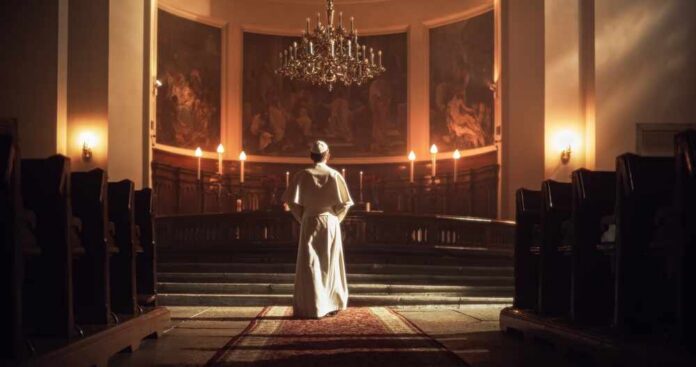
Pope Leo XIV’s first Easter address notably avoided naming specific global conflicts in his Urbi et Orbi blessing, despite the world being engulfed in active wars involving U.S. forces and key allies—a departure from papal tradition that raises questions about Vatican diplomacy under America’s first pontiff.
Story Snapshot
- Pope Leo XIV delivered his debut Easter Mass on April 5, 2026, calling for peace and nonviolence amid the ongoing U.S.-Israeli war on Iran and Russia’s Ukraine campaign
- The traditional Urbi et Orbi blessing omitted naming specific conflicts, breaking from predecessors who explicitly identified war zones
- Leo’s U.S. background and general peace message contrast with his earlier direct criticism of war-justifying prayers on Palm Sunday
- Israeli restrictions on Holy Land worship during Easter strained Christian-Israeli relations, blocking key religious leaders from traditional ceremonies
Historic Easter Mass Amid Global Warfare
Pope Leo XIV celebrated his inaugural Easter Mass as pontiff in St. Peter’s Square on April 5, 2026, delivering a message centered on hope and nonviolence while the world faces significant conflicts.
The U.S.-born pope, the first American to hold the papacy, addressed thousands gathered in the flower-adorned square as the U.S.-Israeli war on Iran entered its second month and Russia’s campaign in Ukraine continued.
Leo’s homily emphasized Christ’s nonviolent resurrection power, urging global leaders to pursue dialogue over arms and overturn the “stones” of sin, including war, injustice, and selfishness.
In his traditional "Urbi et Orbi" blessing, Pope Leo XIV warned against complacency in the face of relentless violence https://t.co/SigeRdadrR
— DW News (@dwnews) April 5, 2026
Notable Omission in Urbi et Orbi Blessing
The pontiff’s traditional Urbi et Orbi blessing, delivered from St. Peter’s Basilica loggia following the Mass, conspicuously lacked specific references to ongoing conflicts. This represents a marked departure from established papal practice, as predecessors like Pope Francis routinely named war zones explicitly during this global address.
The omission comes as American forces actively engage in Middle Eastern operations alongside Israel, raising concerns about whether Leo’s U.S. origins influenced a softer diplomatic approach. For those who value American strength and clear moral leadership, this vagueness undermines the clarity needed when confronting aggression and defending allies.
Contrast With Earlier Direct Criticism
Leo’s general peace message stands in notable contrast to his more pointed remarks during Holy Week. On Palm Sunday in late March, the pope sharply criticized prayers that justify war, and on the Tuesday before Easter, he expressed hope that hostilities would end before the holy day. These earlier statements demonstrated a willingness to confront wartime justifications directly.
The shift to broader, less specific language in the Urbi et Orbi suggests calculated diplomatic messaging that may prioritize Vatican relationships over prophetic clarity. This approach could signal a concerning hesitancy to call out specific aggressors when American interests and security are at stake.
Holy Land Worship Restrictions Strain Relations
Easter celebrations in the Holy Land faced unprecedented restrictions as Israeli authorities imposed gathering limits, citing security concerns from ongoing missile attacks. These measures affected Christian, Muslim, and Jewish observances during the convergence of Easter, Ramadan, Eid, and Passover.
Israeli police blocked Latin Patriarch Pierbattista Pizzaballa from attending Palm Sunday services at the Holy Sepulcher, and ceremonies at traditional sites were scaled back significantly. While security concerns are legitimate, these restrictions strained Israel-Vatican relations at a sensitive moment.
For Christians worldwide who support Israel as America’s key Middle Eastern ally, these tensions highlight the complex balance between security needs and religious freedom that conservatives have long championed.
The pope’s Easter vigil on April 4 included the baptism of 10 adults and a homily warning against indifference to evil, echoing his predecessor’s teachings. Leo emphasized that Christ’s resurrection power “fosters respectful relationships” and serves the common good rather than private interests.
His call to lay down arms through dialogue resonates with Catholic teaching on just peace, yet the absence of specific conflict identification in his most prominent address leaves observers questioning whether diplomatic caution has overtaken moral clarity in an era when American leadership—both political and now spiritual—faces global challenges requiring decisive positions.
Sources:
Photos show Pope Leo’s first Easter Mass as pontiff – Crux
Pope Leo XIV calls for hope amid global conflicts on his first Easter – CBS News