
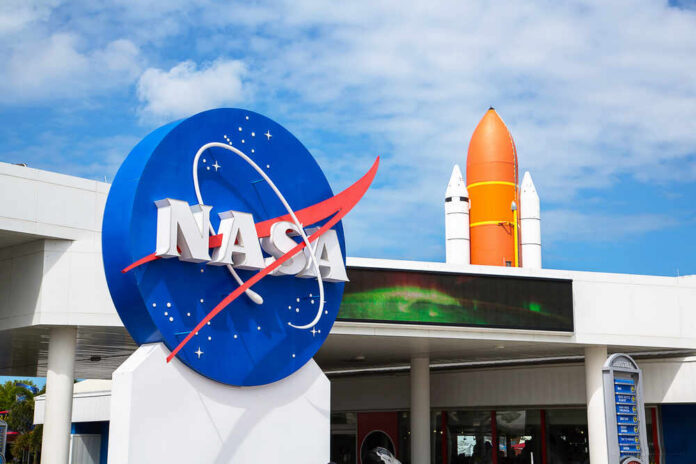
NASA just put real money and real names behind a permanent American foothold on the Moon’s south pole—built by industry, flown often, and designed to stay.
Story Snapshot
- NASA set a 10-year commercial framework with a $10 billion ceiling for lunar deliveries.
- The first base site targets the Shackleton Connecting Ridge near the lunar south pole.
- SpaceX will demo Moon-to-Earth communications with Starship deployments in 2028.
- NASA says the goal is sustained human presence, not one-off flags-and-footprints.
NASA’s pivot: from trips to tenure on the Moon
NASA described Moon Base as a long-term effort to enable a steady American presence at the lunar south pole, not a short visit with a quick ride home. Administrator Jared Isaacman cast it as humanity’s first outpost on another world, and he put a pin on the map: the Shackleton Connecting Ridge, a high-value area near the south pole that offers terrain and illumination advantages for power and access. The mission model builds and learns in steps, with every flight treated as a chance to get tougher and smarter.
The contract engine behind this push is commercial. NASA set up a multiple-award, indefinite-delivery framework with a combined maximum value of $10 billion over ten years. That invites competition among firms like Blue Origin, Firefly Aerospace, and SpaceX for task orders that move cargo, tech, and science to the surface. The ceiling does not equal spending; it caps how much NASA could award across all tasks. Still, a big ceiling signals intent to buy many trips, not a handful.
The South Pole play: why here, why now
The program centers on the South Pole for practical reasons. The area offers near-continuous light on certain ridges to power equipment and deep, cold craters nearby that could hold water ice. NASA calls the Shackleton Connecting Ridge strategic, and early deliveries are expected to use Blue Origin’s Mark 1 Endurance lander to seed that zone with gear and experiments. A steady foothold there lets crews test life support, power, and mobility in harsh conditions while building logistics step by step.
Communications may be the quiet linchpin. NASA selected SpaceX to demonstrate a cislunar communications network by sending satellites to the Moon’s neighborhood on Starship in 2028. If that system works, teams on the ground and in orbit can get reliable links for command, telemetry, and navigation. That lowers risk for every landing, rover drive, and cargo drop that follows. A robust link also means more science sent home in real time, which keeps the program honest and useful.
Faster with partners, but eyes open on risk.
NASA’s use of many providers should speed deliveries and prevent a single-point choke. The agency’s own update says each mission, crewed or robotic, is a learning cycle meant to harden operations in a dangerous place. That approach fits American conservative values: complete the work, pay for performance, and scale what proves itself. The ceiling contract is not a blank check; it is a scoreboard where only completed tasks win funding. Taxpayers get options, not excuses.
The gaps are real. The record shows awards, targets, and planned windows, but it does not show a finished base, permanent power, or proven monthly access yet. The $10 billion number is a ceiling, not cash already spent. These facts support strong intent and a pipeline, not a done deal. That is fine if leaders keep score by deliveries, not press releases. Oversight should track task orders, launch cadence, landing outcomes, and mission value earned per dollar.
Science priorities and the far side debate
A group of astronomers argues for strict protection of the lunar far side for radio science. They warn that satellites, landers, mining, and artificial light could spoil a unique radio-quiet haven. The American Astronomical Society has urged a science-first approach, warning that exploration could destroy rare evidence, including polar water and regolith records, and has called for missions like VIPER to precede routine traffic. NASA’s own technical writing says science and public inspiration are core aims of Moon Base.
Science — NASA unveiled up to $10 billion in lunar delivery contracts Saturday for its 2032 Moon Base. Eight companies, including SpaceX and Blue Origin, will compete for cargo missions, and Blue Origin will land PROMISE, a nuclear-powered rover built from a Mars rover twin, at…
— Scott T Archer (@ScottTArcher) November 9, 2026
These points do not dispute NASA’s south pole plan; they warn against mission creep that trashes special sites. That is a fair guardrail. The smart path is dual-use with discipline: keep the South Pole build focused on tested flight rates, clean operations, and transparent science returns. Fence off the far side for radio astronomy and establish quiet zones before industry arrives. That balance meets common-sense standards: grow America’s lead while protecting what cannot be replaced.
Sources:
foxbusiness.com, nasa.gov, science.nasa.gov, space.com, phys.org